
The St. Augustine Church Solar System
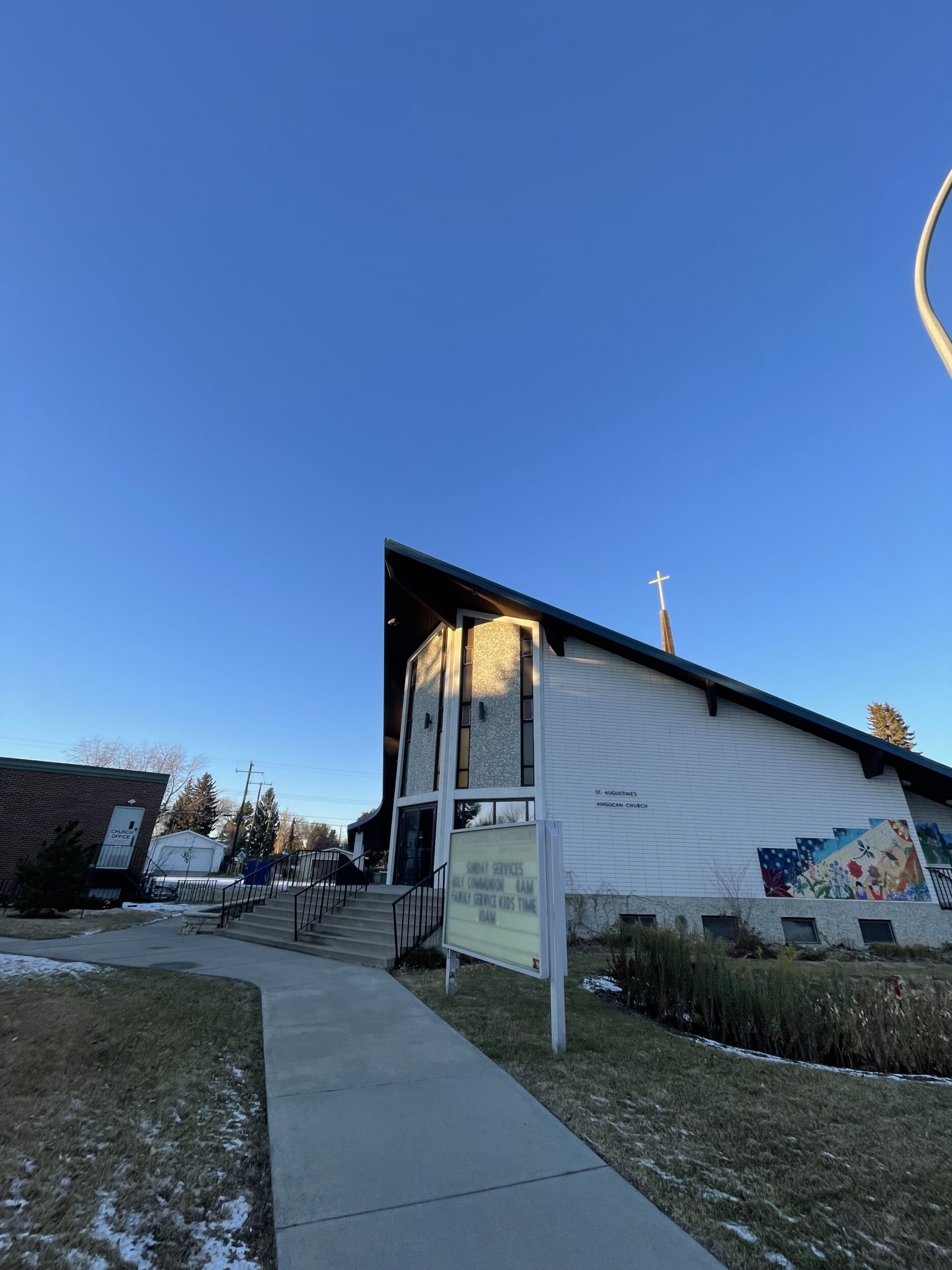
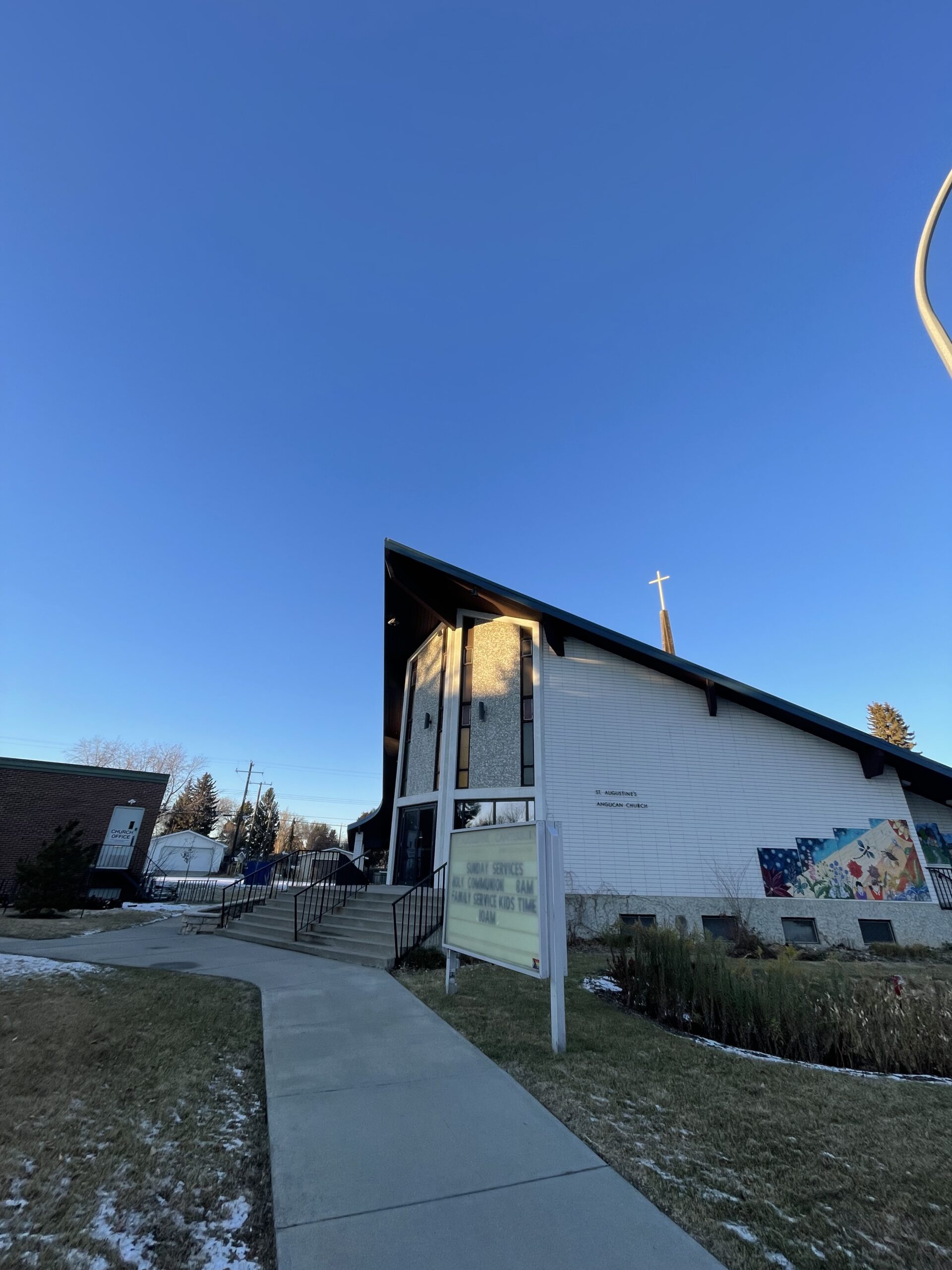
Meaningful climate action does not always begin with sweeping policy or distant plans. Sometimes, it begins with a conversation, a community, and a rooftop.
A fortuitous meeting between the former rector of St. Augustine church and a Board member of the Solar Power Investment Cooperative of Edmonton (SPICE) sparked an exciting possibility: could St. Augustine generate clean electricity directly from its own rooftops?
That conversation led the church to explore the feasibility of a solar installation, with a focus on the potential to reduce both electricity costs and carbon emissions. They discovered that St. Augustine was not only ready for solar but also uniquely well-positioned to lead by example.
The congregation already had a strong foundation of environmental stewardship. An engaged Rewilding group had created a community garden and partnered with EPCOR on a water diversion project on church property. In other words, care for Creation was already part of the life of the community.
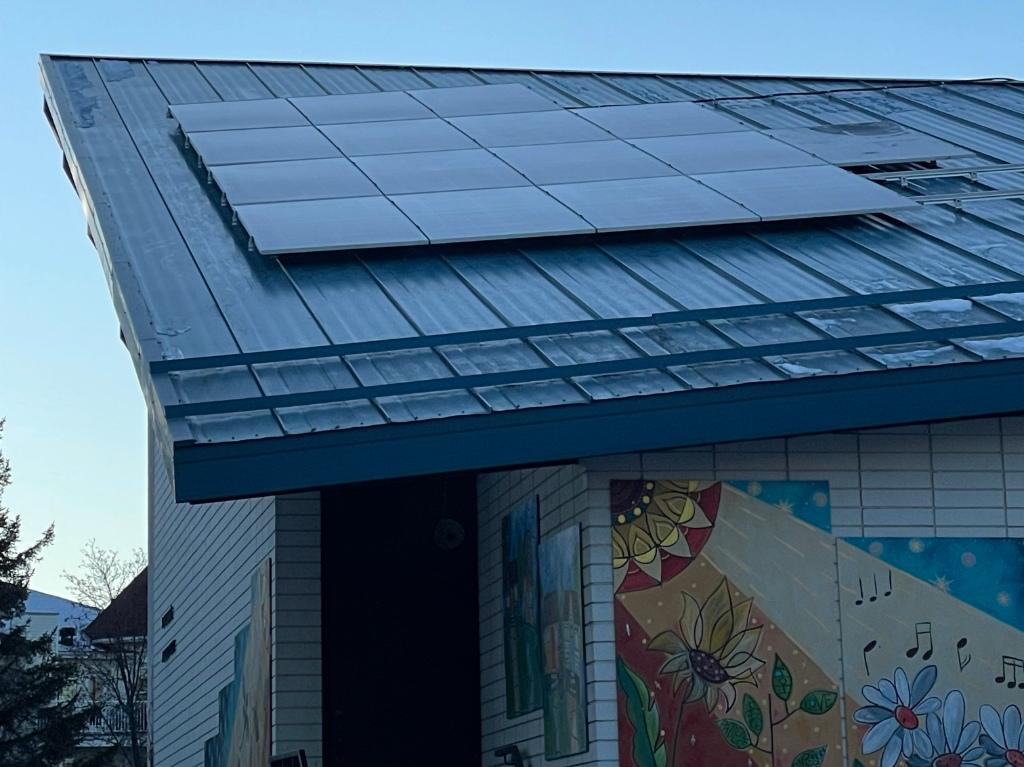
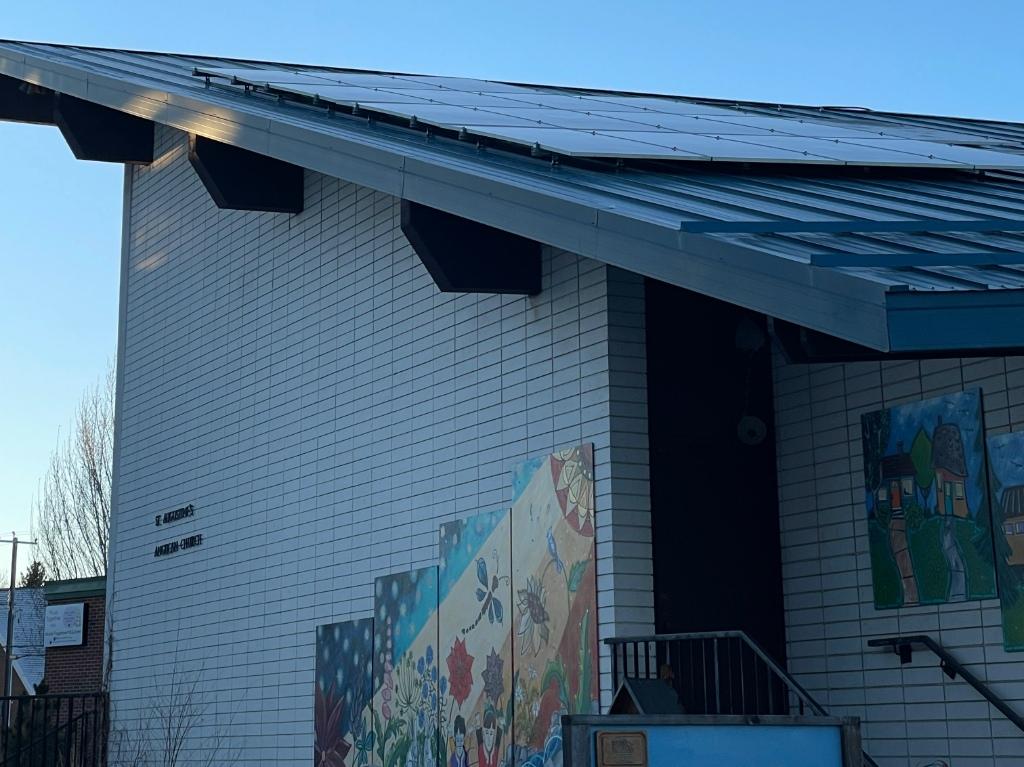
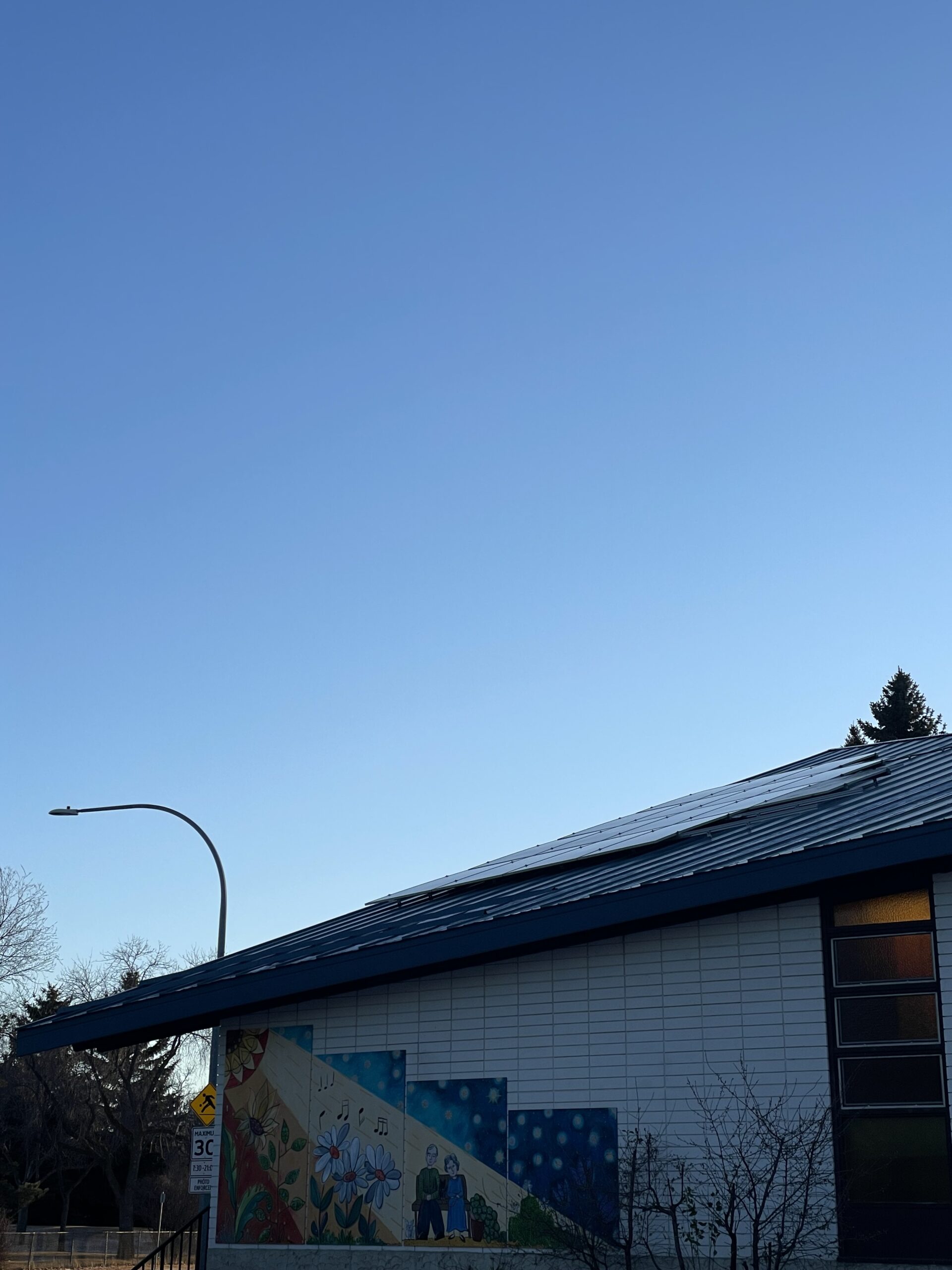
St. Augustine also had excellent technical conditions for solar. The roofs are well oriented, relatively new, and large enough to support panels on both the church and annex buildings—allowing the system to reach the maximum electricity generation permitted under provincial regulations (110% of annual power use). The church also had a down payment available, helping reduce the length of time needed to repay the project loan.
SPICE supported the congregation throughout the process, sharing clear information on how solar systems create savings through onsite electricity use, credits for surplus power sent back to the grid (especially in spring and summer), and measurable reductions in carbon emissions. Before making a final decision, the church’s electrical system was thoroughly assessed to ensure no major upgrades would be required.
Once the project moved ahead, SPICE served as project manager—contracting a reputable solar company and monitoring the work. Funding for the installation was provided through a loan from the Diocese. As with many construction projects, the process included delays due to supply issues and the time required to secure permits from EPCOR.
The solar system is expected to be online in late winter 2026. Once live, the congregation will be able to track electricity generation and savings through an app.
Just as importantly, the panels will stand as a visible sign to the wider community: St. Augustine cares for Creation, and is part of a growing number of churches and community buildings choosing solar as a practical step toward climate solutions.
Learn more about St. Augustine’s journey to solar on page 5 ofthe January 2026 issue of The Messenger.